
moved to Pune from Madhya Pradesh seven years ago. In the beginning, there were moments that stayed with me. Rickshaw drivers occasionally treated me differently. Office conversations suddenly switched into Marathi while I sat there wondering whether people had forgotten I couldn’t understand or whether they wanted me to feel that way.
But over time, things changed. Managers encouraged teams to communicate in languages everyone could understand. People adjusted. Nobody made me feel like my right to exist in the city depended on linguistic performance.
And because dignity existed alongside expectation, something interesting happened.
People learnt Marathi anyway. Friends around me picked it up naturally. Not because somebody screamed at them. Not because they were threatened. Not because politicians convinced them language was a border wall. Because they wanted to connect better and respected the culture around them.
Every Indian child has stood in a school assembly and repeated the pledge.
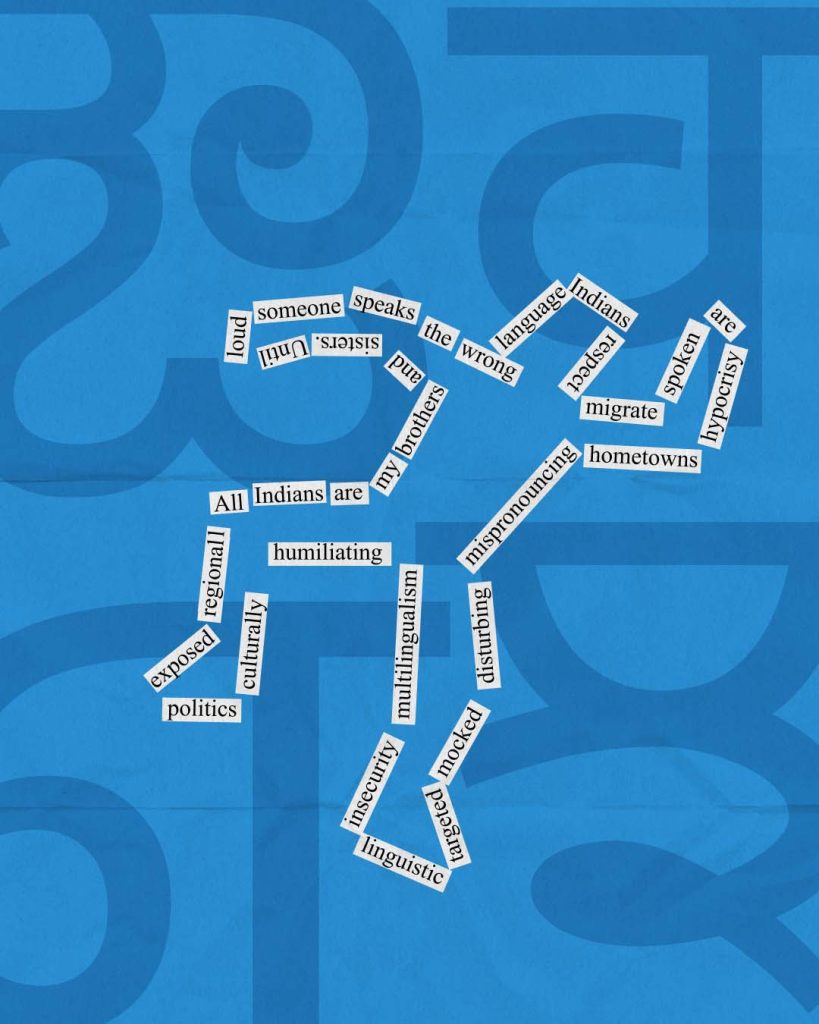
All Indians are my brothers and sisters.
A sentence we memorised before we were old enough to question it. Right next to unity in diversity, national integration, and maps in textbooks coloured to look beautifully seamless.
Then we grew up.
And suddenly, being Indian didn’t seem to be enough anymore.
Now you also need to sound correct.
Speak the right language. Use the right accent.
Because apparently, all Indians are my brothers and sisters with regional terms and conditions.
The Cost of Sounding Like an Outsider
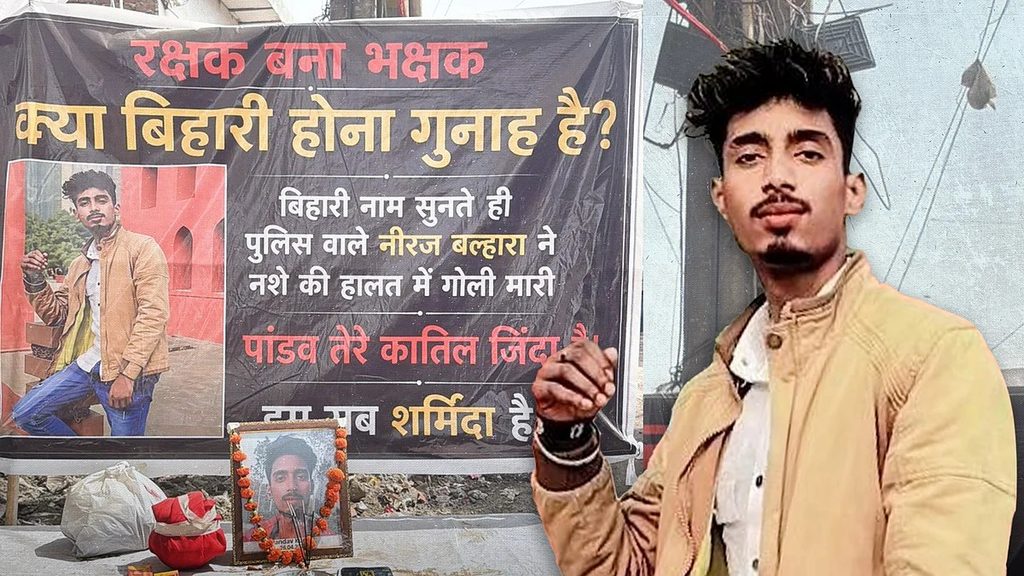
In May 2026, Newslaundry reported the story of 21-year-old Pandav Kumar, a Zomato delivery worker from Bihar’s Khagaria district, who was allegedly shot dead on April 26 by a Delhi Police constable after being called a ‘Bihari’. According to the report, Pandav was his family’s sole breadwinner. His younger brother had dropped out of school due to tuberculosis. Pandav had moved to Delhi years ago to support everyone back home. That night, he had simply stepped out after attending a child’s birthday celebration with friends from his village.
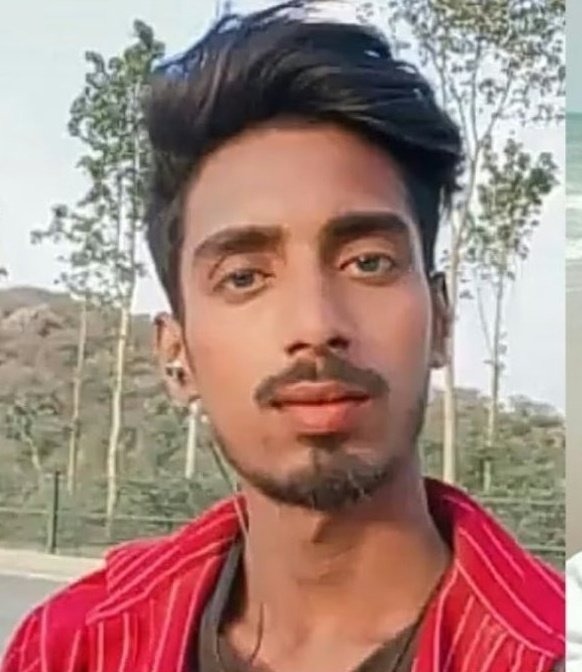
Then, allegedly, came the question so many migrants in India know too well: ‘What are you Biharis doing here?’
Moments later, a bullet was fired. Pandav died. His friend survived with injuries.
And honestly, if that sentence doesn’t disturb you enough already, nothing in this article will.
Because this story is no longer about language alone! It’s about what happens when regional superiority, insecurity, politics, and everyday prejudice start wearing the mask of ‘cultural pride’.
And Pandav Kumar’s case is not an isolated incident. People can comfortably file it away under ‘tragic but rare’.
Pandav Kumar, the family’s sole breadwinner, was killed in a shooting involving a Delhi Police constable.
It is part of a pattern.
A very ugly one. Every few months, India rediscovers its multilingualism by threatening someone over it.
In November 2025, a college student in Maharashtra reportedly died by suicide after being assaulted following a language-related altercation on a local train.
In Dombivli, two women were reportedly assaulted after one of them used the word ‘excuse me’ in English.

Videos have surfaced of political workers allegedly humiliating workers, shopkeepers, and public staff for not speaking Marathi fluently enough. Bengaluru has repeatedly witnessed incidents involving people allegedly targeted for not speaking Kannada. Students from the Northeast have spoken for years about racial and linguistic hostility in metropolitan cities that proudly market themselves as ‘cosmopolitan’.
And these are only the stories that became loud enough to trend. For every viral video, there are probably hundreds of quieter humiliations that never become headlines.
The migrant worker laughed at for mispronouncing a word. The cab driver mocked for his accent.
The office employee silently excluded from conversations. The delivery executive treated like an outsider despite spending more time in the city than the people insulting him. Humiliation rarely trends unless somebody dies, gets beaten up, or the internet gets content out of it.
Everything else becomes background noise. And maybe that’s the most disturbing part. How normal this has started to feel.
India Runs on Migration, We Just Don’t Like Admitting It
Here’s the thing nobody wants to say loudly enough.
India survives because people migrate. Workers leave villages.
Students leave hometowns. Families relocate because survival demands it. Entire cities function because somebody, somewhere, left their home behind. Mumbai, Pune, Bengaluru, Hyderabad, and Delhi — these cities are built every single day by migrants.
The person delivering your food, driving your cab, building your apartment, cleaning your office, serving your coffee, teaching your children — there’s a good chance they came from somewhere else.
Migration isn’t an exception in India; it’s the engine. Which is why the hypocrisy around language becomes impossible to ignore.
We want migrant labour; we just don’t want migrant presence. We want people to contribute economically. But socially, emotionally, and culturally? We keep reminding them they are temporary guests.
Paying taxes, working brutal hours, and helping cities function still isn’t enough. Now you also need to clear a spoken language entrance exam for basic respect.
Nothing says national unity quite like threatening someone’s livelihood over pronunciation.
The Language Question Nobody Wants to Fully Answer
The recent Marathi language debate in Maharashtra exposed this contradiction in full public view. The Maharashtra government’s push requiring taxi and autorickshaw drivers to demonstrate working knowledge of Marathi triggered political debate, legal questions, and anxiety among migrant drivers. But before we turn this into a Maharashtra-only story, let’s be honest: every region in India seems convinced it has a monopoly on language insecurity.
Maharashtra has seen repeated controversies around Marathi. Bengaluru periodically finds itself at the centre of Kannada-related language rows. Over the years, reports have surfaced of people being harassed, threatened, or even assaulted for not speaking Kannada. In one widely reported case in 2014, a student from Manipur was allegedly attacked after locals demanded he speak Kannada because he was living in Karnataka.
The language changes.
The script changes.
The political slogans change.
The behaviour often doesn’t.
Find someone who sounds different.
Question whether they belong.
Call it cultural protection.
And this is where the conversation becomes more complicated than internet shouting matches.
Because yes, Marathi deserves respect in Maharashtra.
Kannada deserves respect in Karnataka.
Tamil deserves respect in Tamil Nadu.
Every language deserves preservation.
Are We Protecting the Language or Simply Performing Power?
If drivers must prove Marathi proficiency, what comes next?
Doctors?
Nurses?
Teachers?
Private employees?
Students?
Will every Indian eventually require linguistic clearance certificates before crossing state borders? Because that sounds less like unity and more like internal immigration control.
And yet, while these debates explode politically, ordinary people remain trapped in the middle. Regional communities fear cultural erasure. Migrants fear humiliation and exclusion. Politicians harvest both anxieties like electoral crops. Meanwhile, the average person is just trying to survive rent prices and traffic. The irony becomes even more absurd when you look at the larger national picture. The same political ecosystem that promotes Hindi aggressively at the national level often simultaneously defends regional language pride locally.
In Maharashtra, backlash erupted against policies seen as ‘Hindi imposition’ in schools. Opposition leaders described it as a threat to Marathi identity. In Tamil Nadu, resistance to Hindi imposition has existed for decades. Karnataka has seen campaigns demanding stronger visibility for Kannada.
And honestly?
Some of those concerns are valid.
India cannot flatten itself into one language. But there’s a difference between resisting linguistic domination and punishing ordinary people for sounding different. Those are not the same thing. And somewhere in India’s language wars, that distinction keeps collapsing.
The Foreigner Exception
Now let’s talk about one of the funniest and most embarrassing contradictions in this country. Watch a white tourist struggle through one sentence in Hindi.
Instant national celebration.
Somebody starts recording. Instagram captions appear.
‘OMG, he respects our culture.’
‘Protect him at all costs.’
‘He speaks better Hindi than me.’
Now watch an Indian migrant struggle with a regional language in another Indian state. Suddenly everybody becomes a border security officer.
‘You’ve lived here three years and still don’t know the language?’
‘Why are you here then?’
‘Go back.’
The white tourist gets encouragement. The migrant worker gets suspicion. The exchange student gets applause. The delivery driver gets mocked. And let’s be brutally honest here: the standard isn’t always effort.
It’s familiarity. It’s perceived belonging. People often decide whether your language mistakes are charming or irritating based on who they think you are before you’ve even finished speaking.
A foreign tourist struggling through a sentence is often seen as someone embracing the culture. An Indian from another state making the same effort can be asked why they haven’t learnt the language already. That is not language pride. That is gatekeeping disguised as cultural protection.
Because if communication were genuinely the goal, effort would matter more than perfection. Broken Marathi would still be welcomed. Broken Kannada would still count. Broken Hindi would still deserve patience. Instead, fluency becomes a measure of belonging. And the people perceived as outsiders are often expected to prove themselves the fastest.
The Language of Exclusion
I moved to Pune from Madhya Pradesh seven years ago. In the beginning, there were moments that stayed with me. Rickshaw drivers occasionally treat me differently. Office conversations suddenly switched into Marathi while I sat there wondering whether people forgot I couldn’t understand or whether they wanted me to feel that way. But over time, things changed. Managers encouraged teams to communicate in languages everyone could understand. People adjusted. Nobody made me feel like my right to exist in the city depended on linguistic performance. And because dignity existed alongside expectation, something interesting happened.
People learnt Marathi anyway. Friends around me picked it up naturally. Not because somebody screamed at them. Not because they were threatened. Not because politicians convinced them language was a border wall. Because they wanted to connect better and respected the culture around them. Because curiosity works much better than hostility ever will.
They learnt it like a skill. Not an obligation. Like respect. Not fear. And maybe that’s the part India keeps getting embarrassingly wrong. People don’t resist languages. People resist humiliation. The problem was never Marathi, Kannada, Hindi, or Tamil.
The problem begins when language stops being an invitation and starts becoming a moral superiority contest. Because somewhere along the way, some people became convinced that another language entering their state is enough to destroy their culture, identity, heritage, civilisation, and the entire emotional stability of society. Which is fascinating considering India has survived invasions, colonisation, partition, corruption, inflation, pollution, potholes, and Mumbai traffic, but apparently hearing the ‘wrong’ language at a tea stall is where we finally collapse as a civilisation.
And the saddest part? Most migrants are already trying. Trying to fit in. Trying to survive. Trying to learn. Trying to belong.
But belonging in India increasingly feels conditional. You can work here. Build here. Pay rent here. Drive our cabs. Deliver our food. Help run entire cities.
Just don’t sound too different while doing it. Because the moment somebody’s dignity becomes dependent on how they sound, we have already failed the idea of India we keep performing in school assemblies. So maybe the next time we proudly say ‘All Indians are my brothers and sisters’, we should finally say the quiet part out loud too. Unless they speak the ‘wrong’ language.