
Every home has a place where things go to wait for their second life.
A garage. A loft. A cupboard. A suitcase under the bed. A plastic bag inside another plastic bag because, obviously, that also has potential.
In my house, it’s the garage. In yours, it might be the kitchen drawer, the guest room, or that one shelf nobody opens unless there’s a family emergency.
This is not a story about clutter. Not really.
It’s about the strange, funny, very emotional way we keep saving things for a version of life called “later.”
It is also a little bit about the hoarders of our families.
In my case, it’s my mum. She has always had this very specific relationship with things. She doesn’t just see an old bedsheet. She sees backup. She doesn’t just see a box. She sees future use. She doesn’t just see a pile. She sees effort, money, memory, and the possibility that one day, somehow, this exact thing may save the day.
And honestly, that is the part I understand.
What I don’t understand is when “saving” becomes “forgetting,” and the thing kept for later quietly becomes the thing nobody can find, use, donate, repair, or even emotionally defend anymore.
The Garage Has Receipts
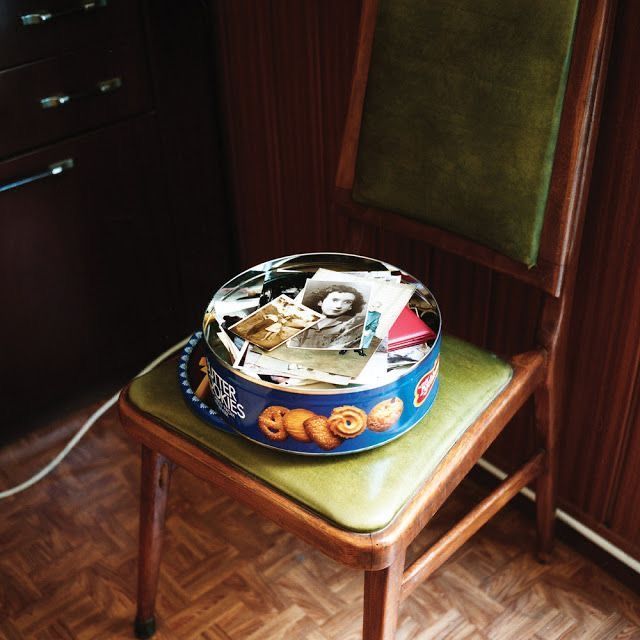
My mother is usually very happy not taking my help with household cleaning and organising.
Which is fair. Because the second I enter the scene, peace leaves the group chat.
She is the kind of person who will run an entire house, remember where the turmeric is, know which neighbour borrowed which bowl in 2017, and still insist that the one faded dupatta in the back of the cupboard has “some use.” Her brain is basically a household archive with emotional subtitles.
So when I question the archive, naturally, the archive questions my audacity.
As long as I mind my own business, live out of the suitcases I’ve brought home, and don’t look too closely at anything, all is well.
Then one of two things happens.
Either she asks me to “go keep this there,” or I notice something I was never meant to notice.
Like clothes from when she was my age.
Or old bags.
Or random fabric.
Or something that has been “kept safely” for so long that even the thing itself has forgotten its purpose.
And that’s when the fight begins.
Everything Is Useful If You Believe Hard Enough
To be fair, she’s not entirely wrong.
During my fashion design days, I did use old clothes and fabrics to repurpose them into new designs. Very sustainable. Very creative. Very “look at me saving the planet with one old kurta.” But here’s the problem with saving things for later.
Sometimes, by the time later arrives, the fabric has gone bad. The stitches don’t hold. The quality has died. Or worse, you forget you saved it in the first place and end up buying the same thing again. So now you have the old thing, the new thing, and the emotional burden of both.
Cute.
The Indian Home Runs on ‘Kaam Aa Jayega’
If you grew up in an Indian home, you know the sentence.
“Rakh do, kaam aa jayega.” Keep it. It’ll be useful.
This sentence has saved many things from death. Old containers. Bedsheets. Dupattas. Wires. Notebooks. Gift boxes. Broken bags. Clothes that no longer fit anyone but are somehow still “good material.”
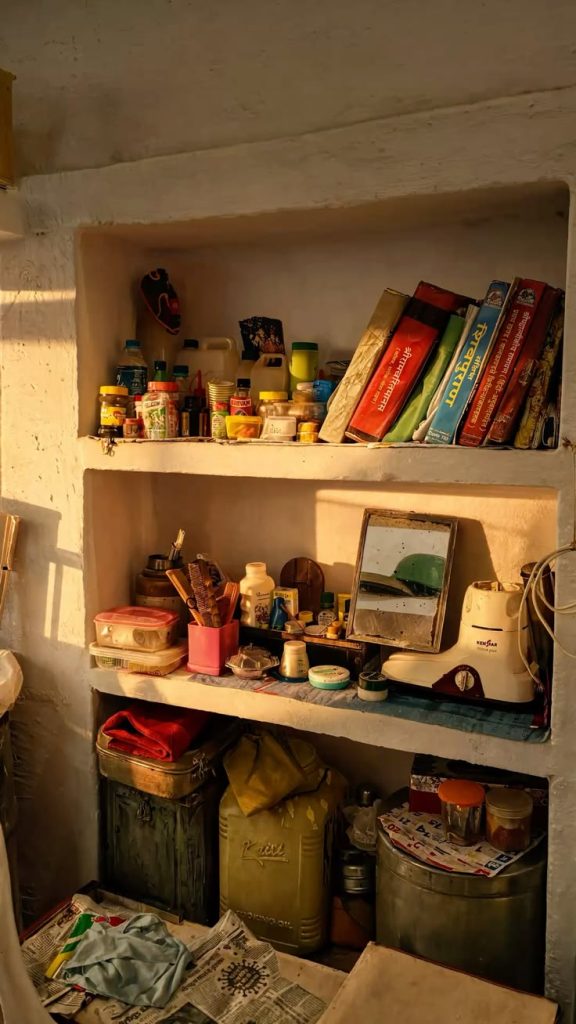
And listen, there is history there.
For a lot of our parents, saving things wasn’t a quirky habit. It came from scarcity. From not having enough. From knowing the value of money. Growing up in homes where you didn’t throw something away just because you were bored with it.
So no, this is not me saying our mothers are wrong.
It’s me saying maybe the “later” they’re preparing for has quietly taken over the house. And with my mother, “later” is not laziness alone. It is a habit. It is an attachment. It is also the mental load of running a home where every object has to be accounted for, every expense has to be justified, and every perfectly usable thing feels rude to discard.
The Problem With Later Is That It Has No Calendar Invite
My mother’s usual defence is simple.
She has to do everything in the house. Nobody helps. Everything is on her. Organising is also another task added to the pile of tasks already waiting for her.
And honestly? Fair.
Decluttering sounds cute on the internet. In real life, it means bending, sorting, dusting, arguing, deciding, donating, carrying, and then listening to someone say, “But why did you give that away?”
No wonder the pile becomes a “later” pile. The donation bag sits in one corner. Then moves to another corner and somehow migrates to the garage and becomes part of the architecture.
Not a Mom Thing, a Letting-Go Thing
The funny part is, this is not just my mother.
My brother has been holding on to notebooks from standard 11.
Standard 11th. He doesn’t use them. He doesn’t need them. He probably doesn’t even remember what’s inside them.
But touch the drawer, and suddenly it’s a heritage site. For him, it’s not about scarcity. It’s about comfort. He arranges his things a certain way. His space feels familiar. Even if he’s not using half of it, knowing it’s there makes him feel settled.
And that’s the thing.
Some people hold on because they grew up with less. Some people hold on because change feels annoying. Some people hold on because deciding is exhausting.
Some people hold on because their mess has become their comfort zone.
So no, it’s not a mother thing. It’s not even a money thing. It’s a letting-go thing.
Minimalism Meets the Middle-Class Cupboard
Watching The Minimalists: Less Is Now makes living with less look almost too simple.
The documentary follows Joshua Fields Millburn and Ryan Nicodemus, better known as The Minimalists, as they talk about how owning less can make space for more actual life.
Lovely thought. But Indian homes complicate minimalism. Because here, an extra bedsheet is not just an extra bedsheet. It is guest culture, emergency planning, middle-class memory, and “what if someone needs it?” folded into one.
Minimalism says: keep what adds value. Indian homes say: but what if this random cable adds value in 2031? And that’s where the real work begins. Not in throwing everything away.
In asking: Is this still serving me, or am I just scared to let it go?
My Personal Rule: Keep the Story, Not the Storage Problem
I’m not someone who believes everything old must go. I keep things too. I keep letters, clothes that still feel like a version of me, small objects that carry a person, a place, or a time I don’t want to lose. I understand the drama of a thing becoming more than a thing. Sometimes a random top is not a random top. Sometimes it is a whole era with sleeves.
But I do have one rule. If I can tell you why I’m keeping it, it can stay.
If the only reason is “maybe later,” “just in case,” or “I forgot this existed but now that you’ve shown it to me, I feel emotionally attacked,” then we need to have a conversation. For me, the difference is simple. Keeping something should feel like care. Hoarding it should not feel like avoidance.
Some Things Are Memories, Some Are Just Dust With Confidence
There are things worth keeping. A sari that belonged to your grandmother. A letter. A childhood toy. A piece of clothing that carries a whole person inside it. Something that still makes your heart do a small, dramatic thing.
Keep them properly. Store them with care. Give them space and respect.
But the broken wooden chair that someday a carpenter will come and fix? The top you haven’t worn in six years?
The notebook from a tuition class you emotionally left behind in 2018? Maybe not. Not everything is memory.
Some things are just objects with excellent PR. Memory deserves preservation. Clutter just demands accommodation. Know the difference.
The Marie Kondo Method, but Make It Family Drama
With my brother, the calmer route works. You can’t just storm in and say, “Move your things, I need this space.”
That will activate the defence system. You have to tell him, gently, that you know this is difficult. That you’re not here to destroy his entire emotional ecosystem. That you just need him to look at the things and decide what still matters.
Once he gets there, he usually realises he doesn’t need 100 things. Maybe he needs 10.
Fine. Keep the 10. But let the 90 go.
That’s the most practical version of the Marie Kondo idea. Not everything has to “spark joy” in a poetic, Netflix-approved way. Some things can simply be useful. Some can be meaningful. The rest can leave.
With Mothers, You Need a Strategy and Snacks
With mothers, it’s harder.
You cannot simply tell them what to do. That is not how Indian households work. That is how you get a 45-minute speech on everything they have done for you since birth.
You have to help. You have to sort with them. You have to show them what has gone bad, what hasn’t been used, what someone else could actually use, and what is only taking up space.
And most importantly, you have to move fast. Because if you leave the donation pile unattended for too long, it will be reviewed, reconsidered, rescued, and returned to the garage.
The trick is not to fight every time. It is to explain why something can go.
Why it won’t be used. Why someone else may need it more. Why keeping everything is not the same as valuing everything.
Don’t Wait for the Big Clean
The easiest clutter to deal with is the clutter you never create. When you’re about to keep something, pause for five seconds and ask yourself if it has an actual place in your life or just a possible one.
Because if everything gets promoted to “later,” later eventually needs an entire garage.
And if you already have a later pile? Give it a date. Not someday. A Sunday. Take an hour. Put on music. Make coffee. Get everyone involved. Homes don’t belong to one person, and neither does the responsibility of looking after them.
You don’t have to become a minimalist overnight. You just have to stop making “later” do all the heavy lifting.
Before You Ask, What’s Wrong With Hoarding?
Technically, nothing.
Keep what you want. It’s your house. Your cupboard. Your emotional support carton.
But also, let’s be honest.
If you keep things you never use, you make less space for things you actually need.
If you store things “for later” and never find them later, you buy more.
If something could help someone else but is sitting in your garage collecting dust, its usefulness is basically being held hostage.
And if your home starts feeling heavy, crowded, and chaotic, maybe the things are not just taking up space.
Maybe they’re taking up energy.
The Real Test Is Honesty
Maybe the real test is not whether something sparks joy.
Maybe the real test is whether we are being honest about it.
Will I use this? Do I know where it is?
Is it still in good condition? Does it mean something to me? Would someone else use it better?
Am I keeping it because I love it, or because deciding what to do with it feels like work? That last one is usually the problem. A lot of clutter is not attachment. It is postponed decision-making wearing sentimental perfume.
Keep the Meaning, Lose the Dust
The point is not to become a minimalist monk with one chair, two plates, and a beige linen wardrobe.
The point is also not to shame our parents for saving things.
Maybe they saved because they had to. Maybe they kept because life taught them not to waste. Maybe “later” was once a very real survival strategy.
But maybe now, we can update the system. Keep the things that hold meaning. Keep the things that still serve a purpose. Keep the things that make you feel rooted, loved, or quietly happy.
Let go of the things that are only sitting there because no one had the energy to decide. And the garage, finally, gets to stop being a museum of postponed decisions. Because somewhere in the garage, my mother is probably still saving something for later. And if I come back years from now, I have a feeling it’ll still be there.
Waiting.
Dusty.
Confident.
Fully convinced its moment is coming.