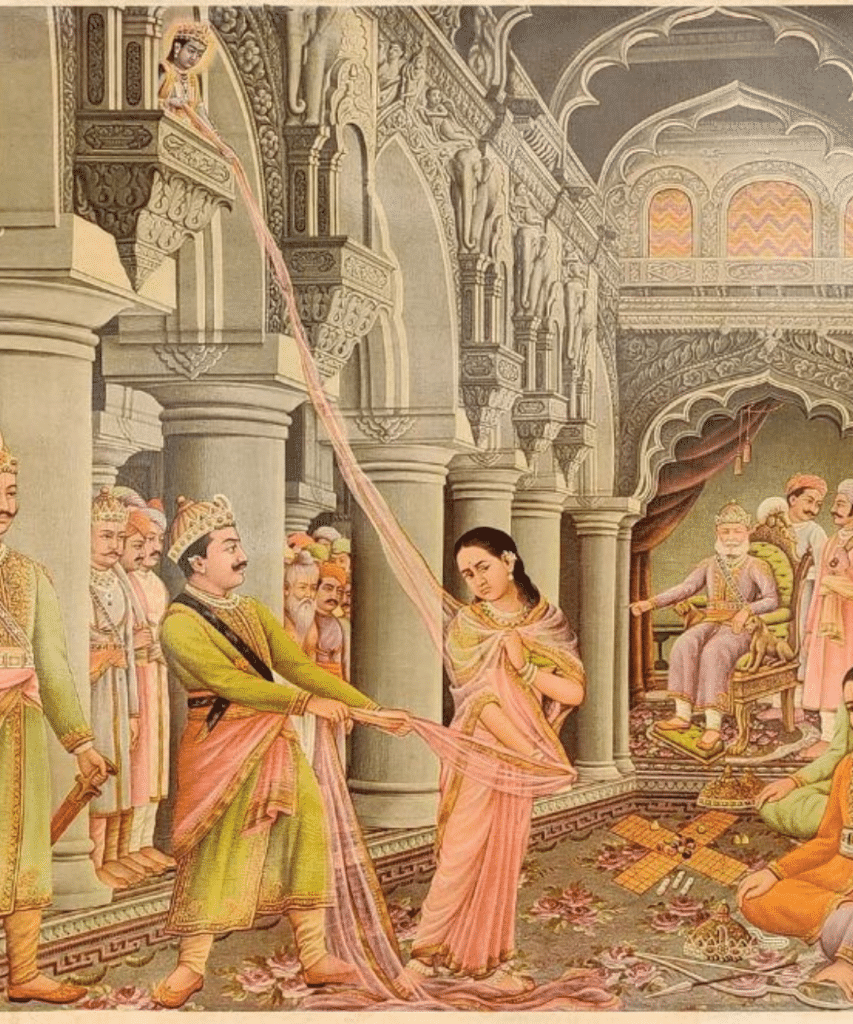

During the pandemic, my parents and I watched Ramayan (1987) and Mahabharat (1988) over dinner. What began as something we did together soon became a reading obsession.
I couldn’t get enough, because these characters were doing something to my mind that was unimaginable, even to me. I was so deep into it; the stories were full of complex human emotions and were presented in a very magnificent way.
I got into reading more and more about Gods, their strategies, and how they moved through the world. The more I read, the more I realised that the stories I thought I understood had so many facets. Mythology had so much more to offer because even the Gods I had grown up praying to could make me question their actions.
A character I admired in one book could frustrate me in another. Someone I had first understood through her suffering could turn out to be a warrior in a different retelling.
The Narrator Changed Whose Side I Took
What surprised me most was how quickly my loyalties changed depending on who was telling the story. These were different writers’ interpretations, not interchangeable accounts of one definitive version. But while reading, it was easy to forget that distinction.
Take Draupadi, for instance.
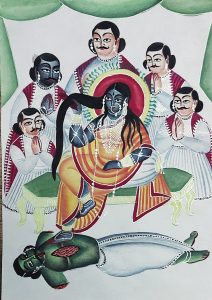
Water-colour painting showing Draupadi tying her hair after the defeat of Duhshasana, surrounded by the Pandavas [Photograph: Wikimedia Commons]
In Mahabharat, Draupadi is shown as a woman wronged by a society that failed her, and even by her own husbands. She got far less screen time and fewer dialogues than the male characters in the television adaptation, yet her rage and her vow of vengeance changed the course of history.
She seemed divine to me because of how much she endured and how the series chose to show it. She was born from fire and had to accept a life with five husbands. And when she was dragged into the royal court and disrobed, she didn’t break. She held on to her dignity and demanded justice. She faced humiliation without letting go of her anger, and that made her feel larger than life, like someone who could bear far more than an ordinary woman could.
The Palace of Illusions by Chitra Banerjee Divakaruni shows Draupadi in a different light, as the epic’s protagonist. Her emotions take centre stage, and her anger, jealousy, pain, and pride are explored in far greater detail, along with her fight against patriarchy and society.
I was impressed by the voice Draupadi is given in this book because she is no longer a character to be looked at. I was looking at the Mahabharata through her eyes. I could read her thoughts, see her rivalry with her mother-in-law, and root for her. I understood Draupadi, and I accepted her faults and her unfulfilled desires. I grew alongside her and almost became a fan.
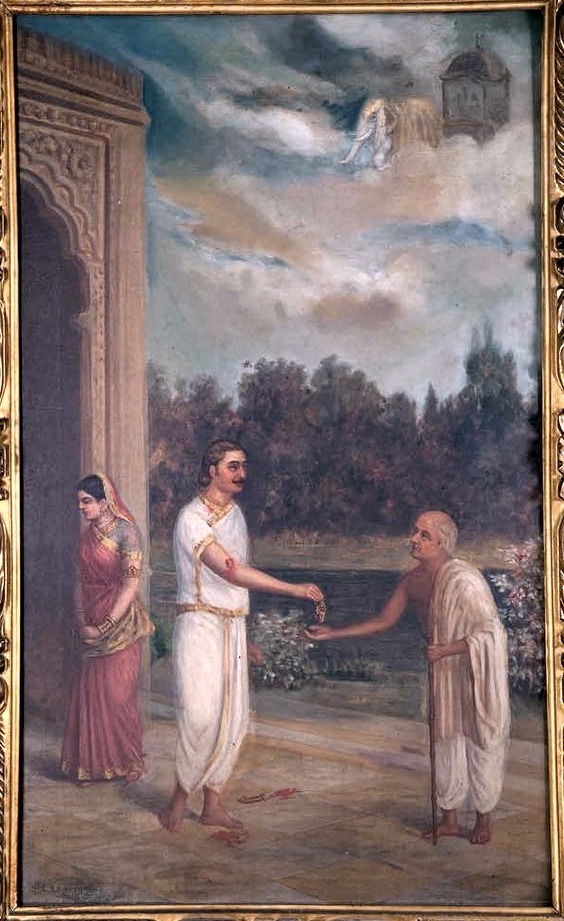
Karna offering his Kavach and Kundal to Indra, who approaches him disguised as a Brahmin. [Photograph: Wikimedia Commons]
And then came Kavita Kane’s The Wife of Karna.
This book challenged the very version of Draupadi I had built in my head.
Through Uruvi, Karna’s wife, I saw a different side of her. At Yudhishthira’s Rajasuya Yagna, the Vedic royal consecration ritual associated with establishing imperial sovereignty, Uruvi noticed Draupadi gazing at Karna again and again. It made her question her bond with him and whether any feelings still existed between them.
And suddenly, Draupadi was no longer the heroic woman I had admired in the previous book. She was someone my protagonist felt jealous of.
You know how we connect with the protagonist while reading? Imagine finding out that your partner shares a history of admiration, rejection, and humiliation with another woman, and that she still seems to hold a place in his life.
It was a strange experience. Draupadi hadn’t become a different person in my head for no reason. I was seeing her through someone else’s eyes, and that changed how I felt about her.
And this happened with Sita, too.
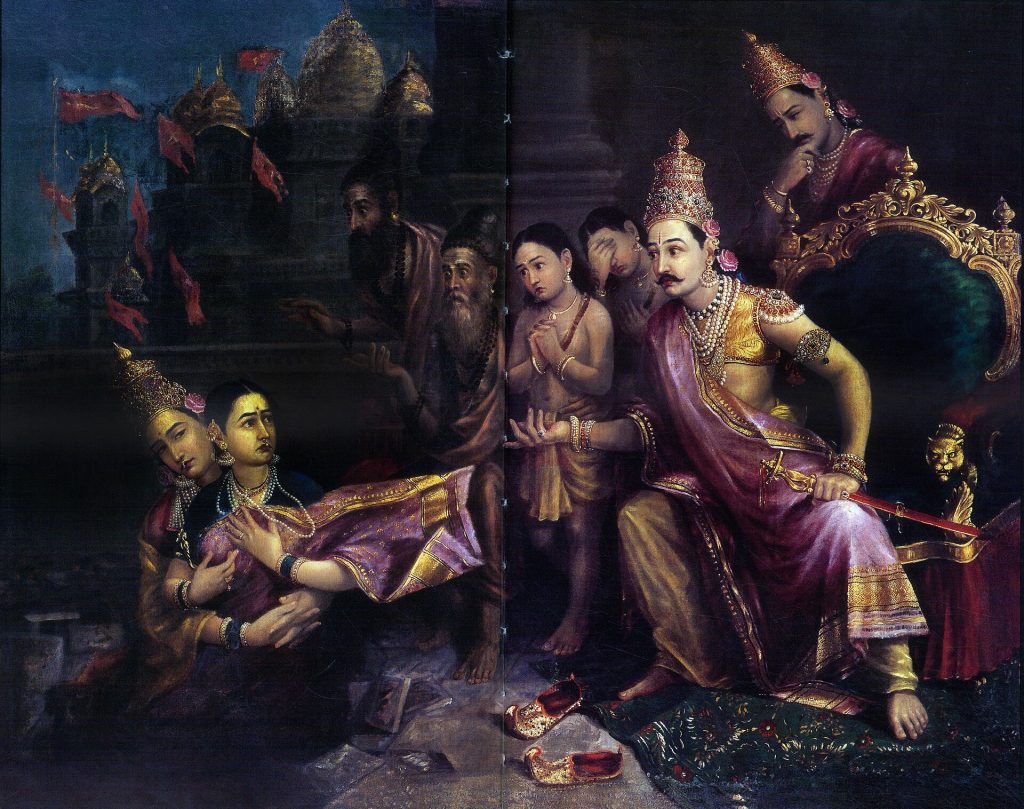
Sita Bhumipravesh (Sita Returning to Mother Earth), oil on canvas by Raja Ravi Varma. [Photograph: Wikimedia Commons]
In Ramanand Sagar’s Ramayan, I watched Sita go through her hardships with very little space to express the range of emotions she might have felt. She is portrayed as an ideal wife who stood by her husband through the worst phase of his life and remained ‘pure’ even after being held captive by Ravana.
Her portrayal felt celestial to me; I admired her, but I couldn’t feel or see what those hardships meant to her as a woman.
Then I read The Forest of Enchantments by Chitra Banerjee Divakaruni. Written from Sita’s perspective, it took me through her emotions, her journey, and her resolve. She was still in love with Rama, but I could see the hurt and disappointment that came with that love. Even after walking through fire to prove her purity, she forgave him. And when Rama eventually abandoned her, she wasn’t entirely surprised, because his doubt about her faithfulness during her captivity had already broken the trust between them. Reading this made me realise that Sita could love her husband deeply and still be hurt by him.
I built a soft corner for her in my heart, so much so that the book turned me into a sobbing mess at 4 am.
I thought I had finally found a version of Sita I could connect with, but then I picked up Amish Tripathi’s Sita: Warrior of Mithila.
.
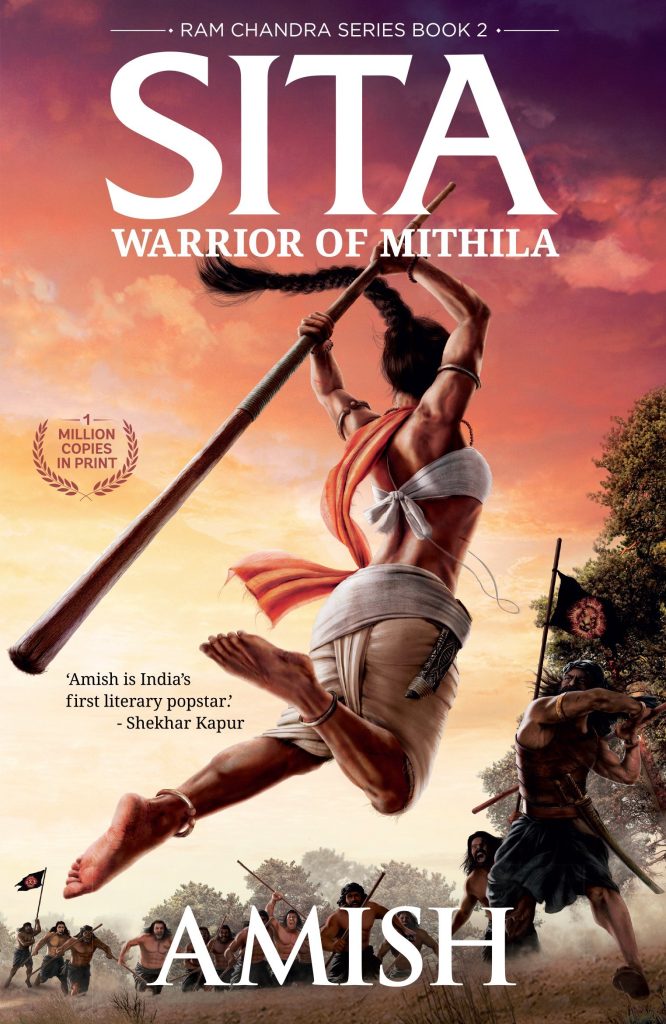
Book cover for Sita: Warrior of Mithila
In this book, Sita is a warrior. She fights Ravana’s army with weapons in her hands when they come to abduct her, and she is trained in combat, strategy, and planning. The idea of her being chosen to become Vishnu was also very different from the Sita I had read about and imagined.
This version really puzzled me. The Sita I knew was now someone who could fight, strategise, and lead. I had gone from feeling sorry for her to admiring her resolve, and now I was reading a version that challenged my understanding of her role altogether.
Phew! That’s how my mind went through all this.
And this is one of the things I love about falling into the mythology rabbit hole. You don’t have to settle for the character you first encountered on television.
You can meet them again through another writer, another perspective, and another interpretation. Sometimes you agree with that version, sometimes you don’t.
And sometimes you end up questioning why you felt so strongly about the character in the first place.
An Emotion Often Assumed Is Only Felt by Humans
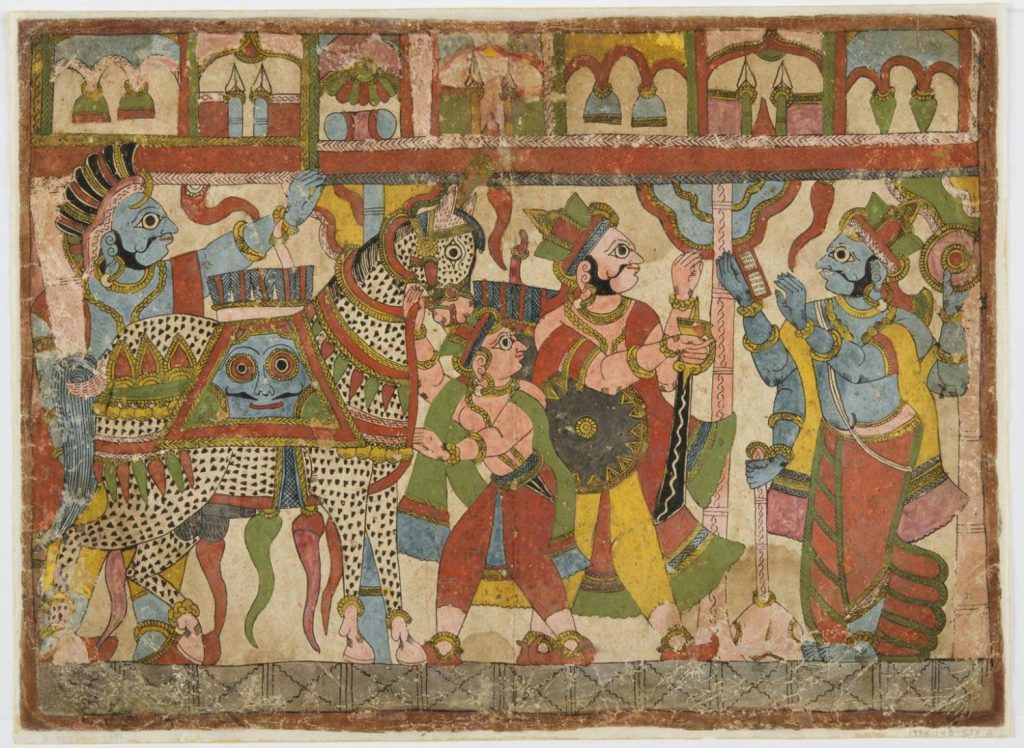
The Sacrificial Horse (Ashvamedha), Paithan-style painting (Chitrapathi), Maharashtra, 19th century. [Photograph: Wikimedia Commons]
There was something else I began noticing as I read these books. For most people, deities are flawless. They might do things that we wouldn’t normally approve of, but we believe they did them for a larger good. We see them sacrificing, protecting, and guiding us. I used to think that way, too.
But when I read about Krishna in the Mahabharata, I observed another side of his character.
Take the episode involving Jarasandha. Krishna had to relocate his people from Mathura to Dwarka to protect them from Jarasandha’s repeated attacks. But he didn’t stop there. He later devised a plan in which Bhima would challenge and kill Jarasandha. I was fascinated by how cunningly he handled the situation, using his intelligence to help the Pandavas succeed.
Isn’t this similar to how we ask our friends to deal with people who are annoying us? Once, my friend hadn’t finished her work, so I had to convince her professor by telling him she was unwell and in the hospital. I know the stakes were completely different, but Krishna used his friend to get the job done, and in many ways, I did the same.
Then there was the episode involving Jayadratha, when Krishna used his Sudarshana Chakra to cover the sun, making the Kauravas believe that the day had ended. Arjuna had vowed to kill Jayadratha before sunset, or else take his own life. Krishna’s strategy gave Arjuna the opportunity he needed.
I found myself appreciating how Krishna could use deception and strategy to get things done. These weren’t necessarily the qualities I associated with a God growing up. And yet, here they were, part of the stories I was reading.
I absolutely loved how Krishna, since his childhood, was lovingly called chhaliya [trickster] because of his playful and cunning nature, from stealing butter to helping the Pandavas win the war.
I wasn’t looking at him only as a divine figure who knew and could do everything. I was looking at his decisions, intelligence, and the lengths he would go to achieve what he believed was necessary.
For the first time, I was comfortable looking at a God through the same lens I used for other characters.
Examining their actions, questioning their choices, and trying to understand their reasoning. I didn’t have to stop thinking critically just because the person in the story was godlike.
I realised I didn’t have to arrive at one final answer every time I read something. I could look at different explanations, explore different theories, and form my own understanding.
That was a big shift for me. Earlier, I would watch a mythological story and accept what I was shown. Now, I want to know why a character acted a certain way, what another version might say about the same event, and whether I agree with the interpretation in front of me.
Mythology has made me comfortable with not having one fixed answer, and eager to find more.
Where Should You Start
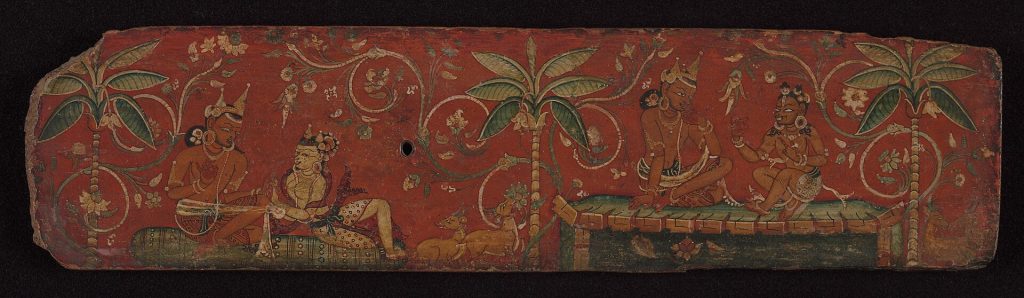
A 12th-century painted wooden manuscript cover from Nepal depicting narrative scenes from Kalidasa’s play Abhijnanashakuntalam. [Photograph: Wikimedia Commons]
You don’t need to watch a television series before picking up a book. Start with the question or character that interests you, and keep track of what kind of book you are reading.
Rajagopalachari’s Mahabharata offers an abridged retelling if you want to follow the wider story. Devdutt Pattanaik’s Myth = Mithya explores ideas and symbols through his interpretations and illustrations. For novels centered on women’s perspectives, try The Palace of Illusions, The Forest of Enchantments, or Karna’s Wife: The Outcast’s Queen. If you want a more freely reimagined adventure, there is Sita: Warrior of Mithila. They offer different ways into the stories, not a single reading order or a substitute for one another.
You may not agree with every interpretation. I certainly haven’t. But now, when I find myself taking a character’s side, I also want to know who told me their story.